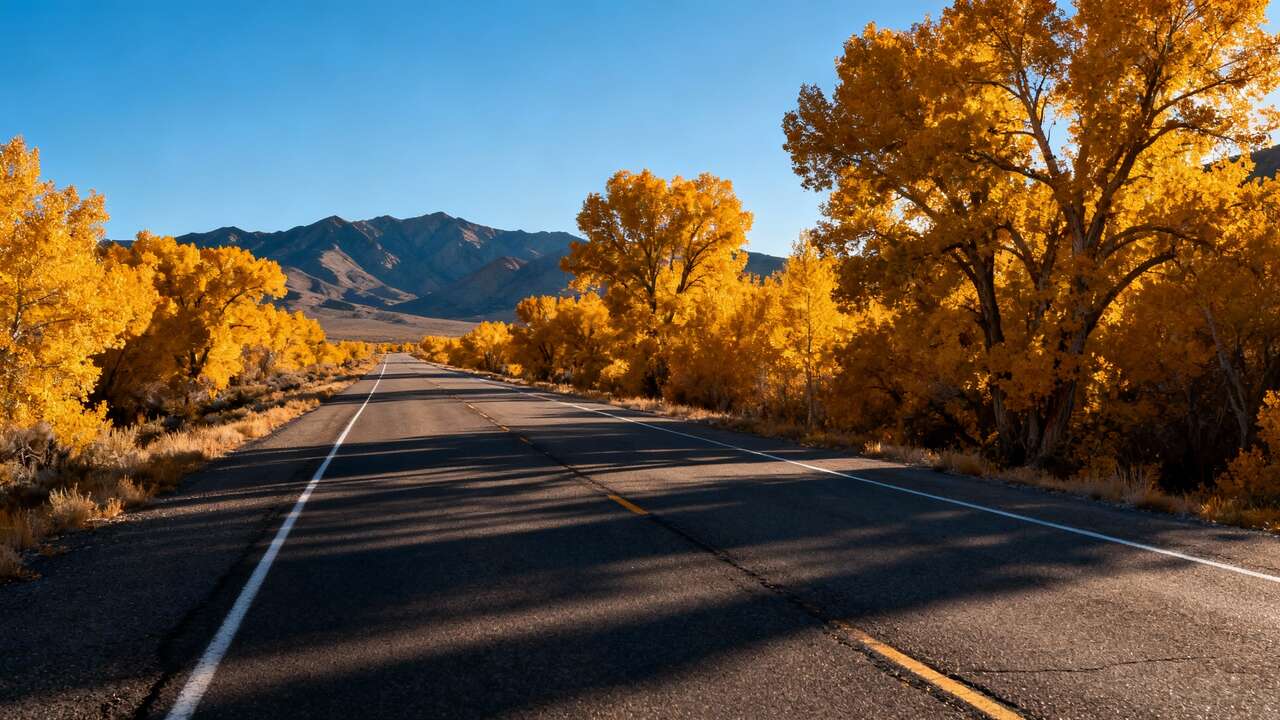

Venture into the heart of the American West, where a stretch of asphalt cuts through immense valleys and over desolate mountain ranges. This is US Route 50 in Nevada, a highway famously dubbed “The Loneliest Road in America”. Far from being a void, this route is a profound journey through history, geology, and a silence so deep it feels like a destination in itself. To travel it, especially as autumn paints the high desert in subtle hues of gold and amber, is to experience a landscape that is both hauntingly beautiful and deeply unforgettable. This is not just a drive; it is an exploration of solitude and the enduring spirit of the frontier.
Historical discovery of America’s loneliest road
The Pony Express legacy
Before it was paved and numbered, the corridor of Highway 50 was a vital artery for communication and expansion. Its most famous early incarnation was as a central part of the legendary Pony Express trail. From 1860 to 1861, riders galloped across this unforgiving terrain, carrying mail between St. Joseph, Missouri, and Sacramento, California. Stations were established every 10-15 miles to provide fresh horses, and the ruins of several, like those at Sand Springs, can still be found just off the modern highway, standing as silent monuments to that brief, heroic chapter of American history.
The Lincoln Highway connection
With the advent of the automobile, the need for a national road system became apparent. In 1913, this route was incorporated into the Lincoln Highway, the very first transcontinental road in the United States. It was a monumental undertaking, an attempt to connect New York City’s Times Square with San Francisco’s Lincoln Park. Driving it then was a true adventure, often on little more than dirt tracks. Today’s US-50 follows much of that original, pioneering path across Nevada, offering a direct link to the dawn of American road-tripping culture.
Earning its nickname
The moniker “The Loneliest Road in America” was bestowed upon the highway in a July 1986 issue of Life magazine. The article described the route as having “no points of interest” and warned drivers to have “survival skills” to travel it. Rather than disputing the claim, Nevada officials cleverly embraced it. They turned the potential negative into a powerful marketing tool, branding the highway as a destination for adventurers, thinkers, and anyone seeking an escape from the noise of modern life. It became a challenge and a badge of honor for travelers to conquer.
The road’s deep historical roots provide a rich context for the stunning natural vistas that define the journey.
Breathtaking landscapes along Highway 50
The Great Basin’s unique topography
The drive across US-50 is a masterclass in the geology of the Great Basin. This vast region is defined by a dramatic basin and range topography, where long, flat valleys are separated by towering, narrow mountain ranges running north to south. The highway cuts directly across this grain, leading to a hypnotizing rhythm of driving: a long, straight shot across a sagebrush-filled valley floor, followed by a winding climb over a mountain pass, only to reveal another immense valley on the other side. Each pass, like those at Austin Summit or Pancake Summit, offers a breathtaking panorama that underscores the sheer scale and emptiness of the landscape.
Flora and fauna of the high desert
At first glance, the desert may seem barren, but it is teeming with resilient life. The landscape is dominated by the silvery-green of sagebrush, the state flower, and dotted with hardy pinyon pines and juniper trees. In the fall, groves of quaking aspen in the higher elevations turn a brilliant gold. Wildlife is often elusive but present. Keep an eye out for:
- Wild mustangs, iconic symbols of the American West, often seen in small herds.
- Pronghorn, the fastest land animal in North America, grazing in the valleys.
- Majestic birds of prey, including golden eagles and various hawks, soaring on thermal updrafts.
Stargazing in the desert
One of the most profound experiences on Highway 50 occurs after the sun sets. The extreme lack of population centers results in some of the darkest night skies in the contiguous United States. This absence of light pollution reveals the Milky Way in astonishing clarity, a brilliant, star-dusted ribbon across the sky. Near the eastern end of the route lies Great Basin National Park, an official International Dark Sky Park, where the celestial display is so pristine that it can feel otherworldly. The vast, silent desert at night offers a humbling perspective on the universe.
These sprawling, empty landscapes are punctuated by the ghosts of those who came seeking fortune, leaving behind remnants of their dreams.
The hidden secrets of Nevada’s ghost towns
Austin: a living ghost town
Perched precariously on the side of a canyon, Austin is the quintessential example of a boom-and-bust mining town that refused to die completely. Founded after a silver strike in 1862, it was once a bustling hub with over 10,000 residents. Today, its population is less than 200, but its history is palpable. Visitors can explore three historic churches, browse antique shops, and see Stokes Castle, a peculiar three-story stone tower built by a wealthy mine magnate. Austin serves as a crucial service stop and a fascinating window into the past, where the line between a living town and a ghost town feels beautifully blurred.
Eureka: the friendliest town on the loneliest road
Further east lies Eureka, which proudly proclaims itself “The Friendliest Town on the Loneliest Road”. Thanks to its silver boom, Eureka was once so prosperous it was known as the “Pittsburgh of the West”. Its history is exceptionally well-preserved in its downtown district. Key landmarks include the Eureka Opera House, built in 1880 and now fully restored, and the impressive Eureka County Courthouse from 1879. These structures are not ruins but active parts of the community, offering a tangible connection to the wealth and ambition that built this remote outpost.
Exploring true ghost towns
For those willing to venture onto a dirt road, the area around Highway 50 is scattered with true ghost towns. One of the most notable is Belmont, located about an hour’s drive south of Austin. In the late 1800s, it was a thriving county seat, but today it features a magnificent, abandoned courthouse, the ruins of mills, and a handful of preserved buildings. Exploring these silent streets, where wind whistles through empty window frames, is a haunting experience that powerfully evokes the transient nature of the mining frontier.
The quiet solitude of these historic sites is perfectly complemented by the crisp air and golden light of the fall season.
An unforgettable autumn journey on the loneliest road
The spectacle of fall colors
While Nevada may not be the first place that comes to mind for fall foliage, the high elevations along Highway 50 offer a spectacular, if subtle, display. As temperatures drop, the quaking aspen groves found on mountain passes like Austin Summit and near Great Basin National Park transform into rivers of brilliant yellow and gold. These vibrant patches stand in stark, beautiful contrast to the muted greens and browns of the surrounding sagebrush steppe. The cottonwood trees along the few creek beds also turn a bright yellow, creating precious oases of color in the vast landscape.
Ideal weather for exploration
Autumn provides the perfect climate for an adventure on the loneliest road. The scorching heat of the summer, which can easily exceed 100°F, gives way to pleasantly warm days and cool, crisp nights. This comfortable weather is ideal for getting out of the car to explore ghost towns, hike a trail in a national forest, or simply stand in the middle of a valley and absorb the immense silence without the oppressive sun beating down. The air is clear, and the low angle of the autumn sun casts long shadows, accentuating the dramatic textures of the mountains.
Fewer crowds, more solitude
Traveling Highway 50 in the fall means you experience the route as intended: in near-total solitude. The summer tourist season has ended, and you can drive for miles without seeing another vehicle. This lack of crowds enhances the experience, allowing for a more personal and introspective journey. It is a time when the road’s nickname feels most authentic, offering a genuine escape and a chance to connect with the landscape on your own terms. The quiet is not empty; it is filled with history, nature, and the sound of the wind.
To fully embrace this unique autumn experience, a bit of careful preparation is essential for a smooth and safe journey.
Practical tips for planning your adventure on US-50
Vehicle preparation and fuel
The remoteness of US-50 cannot be overstated. Services are few and very far between. Before setting out, ensure your vehicle is in excellent working condition with a recent oil change, good tires, and a full tank of fluids. Never pass a gas station without filling up your tank. The main towns with reliable services are Fallon, Austin, Eureka, and Ely. The stretch between Fallon and Austin is particularly long, at 111 miles, with no services in between. Carrying an emergency kit with extra water, a tire patch kit, and blankets is a wise precaution.
Supplies and accommodations
Pack more food and water than you think you will need. While the main towns have restaurants and small grocery stores, options are limited. Accommodations consist primarily of small, independently owned motels. It is advisable to book your lodging in advance, especially during weekends, as rooms can fill up. Camping is also an excellent option, with designated campgrounds available in places like Great Basin National Park and various national forests, as well as opportunities for dispersed camping on public lands for those properly equipped.
Navigating the route and attractions
While the route itself is straightforward, a little planning helps to get the most out of the trip. The Nevada Commission on Tourism offers a “Highway 50 Survival Guide”, a novelty passport you can get stamped in designated towns along the way. Completing it earns you an official certificate. This guide also provides a useful map of key points of interest.
Key Distances on US-50 in Nevada
| Segment | Approximate Distance | Estimated Driving Time |
|---|---|---|
| Carson City to Fallon | 60 miles | 1 hour 15 minutes |
| Fallon to Austin | 111 miles | 1 hour 45 minutes |
| Austin to Eureka | 70 miles | 1 hour 10 minutes |
| Eureka to Ely | 77 miles | 1 hour 15 minutes |
| Ely to Great Basin NP (Baker) | 61 miles | 1 hour |
Armed with this knowledge, one can see that this is more than just a drive; it is a deliberate choice for a certain kind of traveler.
Why choose Highway 50 for your next road trip
An escape from the ordinary
In an age of crowded destinations and curated experiences, Highway 50 offers something increasingly rare: authenticity. This is not a theme park version of the West; it is the real thing. It is a journey for those who find beauty in stark landscapes, who are curious about history, and who are not afraid of silence. It challenges the modern impulse for constant stimulation, rewarding travelers with a sense of peace, accomplishment, and a fresh perspective on the vastness of their own country.
A connection to history
To drive US-50 is to travel through time. You are following in the footsteps of Pony Express riders, early motorists on the Lincoln Highway, and prospectors seeking their fortunes in silver. The road itself is a museum, with each historical marker, ghost town, and century-old building telling a story of ambition, hardship, and perseverance. It is a tangible link to the forces that shaped the American West, offering a deeper understanding of the nation’s history than can be found in any textbook.
The beauty of solitude
Ultimately, the most compelling reason to travel this road is to experience the profound beauty of solitude. In the immense basins of central Nevada, you are a small presence in a vast world. This can be a humbling and deeply meditative experience. It provides the mental space to think, to observe, and to simply be present. The loneliness of the road is not a void to be feared, but an opportunity to be embraced, a rare chance to disconnect from the noise and reconnect with oneself and the natural world.
Embrace the vast emptiness of the Great Basin for a journey that connects you to the raw history and stark beauty of the American West. This is not merely a road, but an experience in solitude and discovery, particularly magical under the golden light of autumn. Plan for self-sufficiency, allow time for unexpected stops, and prepare to be changed by the profound silence of America’s loneliest road.

- This Central American country is the new Costa Rica - 1 November 2025
- This “floating” sauna in a Norwegian fjord is the ultimate Scandi experience - 1 November 2025
- Why this small US town is the “Christmas Capital” of America - 1 November 2025