
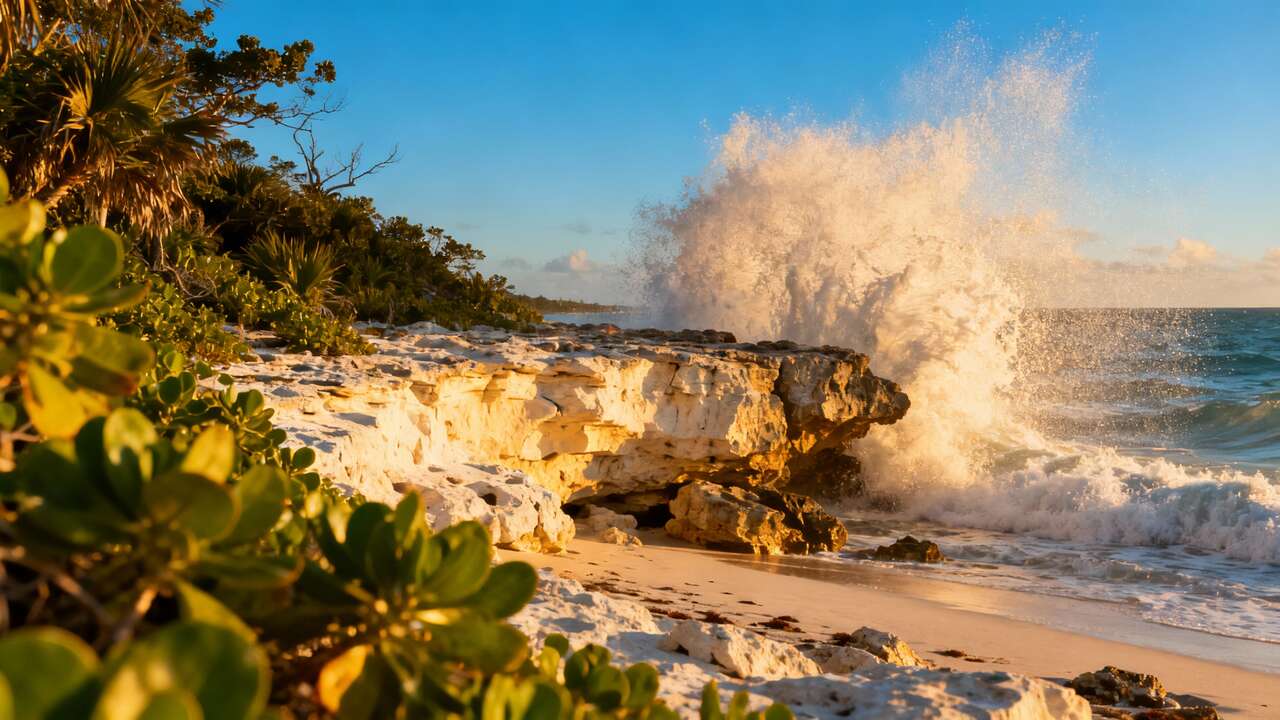

Nestled just north of Jupiter, florida, blowing Rocks Preserve is a unique coastal destination offering stunning views and an engaging natural experience. Covering 73 acres on Florida’s Treasure Coast, this conservation area is not only the most visited preserve of the Nature Conservancy but also a striking contrast to Florida’s typical sandy beaches. Its dramatic shoreline, carved from ancient limestone, creates a powerful spectacle where waves crash and erupt through blowholes, sometimes reaching heights of 50 feet. This natural wonder provides a glimpse into a wilder, more rugged Florida, a protected sanctuary where geology and ecology converge in a breathtaking display.
Discovering Blowing Rocks Preserve
A Sanctuary on Jupiter Island
Blowing Rocks Preserve is located on the southern end of Jupiter Island, a barrier island renowned for its natural beauty and affluent residents. What sets this preserve apart is its status as a protected area managed by The Nature Conservancy, a global environmental organization. Their mission here is to safeguard the fragile ecosystems that define this unique stretch of coastline. The preserve is not just a beach; it is a living laboratory and a model of coastal habitat restoration. It encompasses several distinct environments, including the famous rocky shoreline, an intact dune system, a coastal strand, and the serene Indian River Lagoon.
What to Expect on Your Visit
Upon arrival, visitors will find a well-maintained and thoughtfully designed space that prioritizes nature. The main attractions are easily accessible via boardwalks and sandy trails that meander through the native vegetation. The Hawley Education Center provides valuable insights into the preserve’s ecology and conservation efforts through informative displays and programs. It serves as an excellent starting point to understand the significance of the area before exploring its natural wonders. Be prepared for a different kind of beach day; this is a place for exploration and appreciation rather than traditional sunbathing and resort-style amenities.
Visitor Information at a Glance
| Feature | Details |
|---|---|
| Operating Hours | Open daily, 9:00 a.m. to 4:30 p.m. |
| Entrance Fee | A per-person donation is suggested to support conservation efforts. |
| Parking | Limited parking is available and can fill up quickly on weekends. |
| Facilities | Restrooms and the Hawley Education Center are located on-site. |
The careful management of this site reflects a deep commitment to preserving its integrity, a commitment rooted in a history of community action and foresight.
The Fascinating History of Blowing Rocks Preserve
From Private Land to Public Treasure
The story of Blowing Rocks Preserve is one of conservation triumph. For decades, this dramatic coastline on Jupiter Island was privately owned and, like much of Florida’s coast, faced the looming threat of development. The unique Anastasia limestone formations and the rich biodiversity they supported were at risk of being lost to condominiums and private estates. The landscape was also suffering from the proliferation of invasive, non-native plants like the australian pine and scaevola, which were displacing native species and destabilizing the dune ecosystem.
A Community’s Vision for Preservation
In 1969, the forward-thinking residents of Jupiter Island recognized the irreplaceable value of this land. Concerned about its potential destruction, they began to acquire parcels of the property. Their goal was not for personal gain but to ensure its permanent protection for future generations. Over time, they donated the land to The Nature Conservancy, entrusting the organization with its long-term stewardship. This act of generosity laid the foundation for one of Florida’s most significant coastal restoration projects, transforming a vulnerable piece of land into a thriving natural sanctuary that now serves as an inspiration for conservation efforts elsewhere.
Today, the results of this historical commitment are evident in the restored habitats and the opportunities for public enjoyment and education, allowing for a range of activities that connect visitors with the natural world.
Must-Do Activities at Blowing Rocks
Exploring the Trails and Boardwalks
The preserve offers a network of short, scenic trails that provide an immersive experience of its diverse habitats. A beautifully constructed boardwalk guides visitors over the dune ecosystem, protecting the fragile vegetation while offering panoramic views of the Atlantic Ocean. On the western side of the road, a separate trail system winds through a restored coastal hammock and along the tranquil shores of the Indian River Lagoon. These paths are perfect for a leisurely stroll, allowing for quiet observation of the native plant life and the subtle shifts in the environment from the ocean to the lagoon.
Photography and Wildlife Observation
For photographers and nature enthusiasts, Blowing Rocks is a paradise. The dramatic interplay of rock, water, and light creates endless opportunities for stunning shots, especially during sunrise or when the waves are at their most powerful. The preserve is also a hotspot for wildlife viewing. Keep an eye out for:
- Sea Turtles: The beach is a critical nesting ground for loggerhead, green, and leatherback sea turtles during the summer months.
- Shorebirds: A variety of seabirds and wading birds can be seen along the coast and in the lagoon, including sandpipers, oystercatchers, and herons.
- Marine Life: In the calm waters of the lagoon, you might spot manatees, while the tidal pools on the ocean side teem with small fish, crabs, and other invertebrates.
Swimming and Snorkeling with Caution
While swimming is permitted, visitors should exercise extreme caution. The rocky shoreline and strong currents can be hazardous, particularly during high tide or rough seas. There are no lifeguards on duty. The best and safest area for swimming is at the southern end of the preserve, where the rocks give way to a sandy beach. On calm days, the clear water offers excellent snorkeling opportunities around the rock formations, where you can observe a variety of colorful fish and marine life. Always check the local weather and surf conditions before entering the water. The main attraction, however, remains the powerful geological features that define the shoreline.
The Spectacular Rock Formations
The Geology of Anastasia Limestone
The centerpiece of the preserve is the largest outcropping of Anastasia limestone on the Atlantic coast. This sedimentary rock is a type of coquina, formed during the Pleistocene epoch, approximately 120,000 years ago. It is composed primarily of fossilized shell fragments and sand grains bonded together by calcium carbonate. Over millennia, the relentless action of the waves has eroded the softer parts of the rock, sculpting it into the dramatic ledges, caves, and blowholes seen today. This geological feature is a rarity in Florida, where sandy beaches are the norm, making Blowing Rocks a truly exceptional landscape.
The “Blowing Rocks” Phenomenon
The preserve earns its name from the awe-inspiring spectacle that occurs during high tide, especially when accompanied by a strong easterly wind. As incoming waves crash against the limestone shelf, they are forced into the undercut sea caves and fissures. The immense pressure funnels the water upward through blowholes in the rock, creating spectacular plumes of saltwater that can erupt up to 50 feet into the air. This natural water show is both a powerful and a humbling display of nature’s force. To witness this phenomenon, it is crucial to time your visit with the high tide; at low tide, the rocks are fully exposed, revealing a fascinating moonscape of tidal pools and crevices to explore.
This unique geology not only creates a stunning visual experience but also supports a surprisingly rich and diverse array of plant and animal life.
An Exceptional Flora and Fauna
A Mosaic of Coastal Habitats
Blowing Rocks Preserve is a textbook example of a healthy barrier island ecosystem. It hosts a remarkable variety of habitats in a relatively small area. The restoration efforts have successfully removed invasive species and replanted native vegetation, recreating the natural environments that once thrived here. These include the beach dune, with its salt-tolerant grasses; the coastal strand, a shrubby thicket that acts as a buffer against wind and salt spray; the maritime hammock, a stable forest of tropical hardwoods; and the mangrove-fringed shoreline of the Indian River Lagoon. This biodiversity is critical for the resilience of the coastline.
Home to Protected Species
The restored habitats provide a crucial sanctuary for numerous species, some of which are threatened or endangered. The beach is one of the most important nesting sites for sea turtles in the region. From March to October, hundreds of nests are laid along this protected shoreline. The preserve is also a vital stopover for migratory birds and a permanent home for resident species. The gnarled branches of sea grapes and the dense canopy of the hammock provide food and shelter for songbirds, while the lagoon’s seagrass beds are a vital nursery for fish and a feeding ground for manatees. The health of this ecosystem is a testament to the success of long-term conservation and restoration work, making it an accessible natural treasure for those coming from nearby urban centers.
How to Visit Blowing Rocks from Miami
Planning Your Day Trip
A trip to Blowing Rocks Preserve is an easy and rewarding escape from the hustle and bustle of Miami. The drive is straightforward and takes approximately two hours, depending on traffic. The most direct route is to take I-95 North to exit 87A (Indiantown Road/FL-706) in Jupiter. Head east on Indiantown Road, cross the Intracoastal Waterway, and then turn left onto U.S. Highway 1. From there, turn right onto Beach Road (FL-707) and follow it north onto Jupiter Island. The preserve will be on your right.
Tips for a Perfect Visit
To make the most of your visit, a little planning goes a long way. The most important factor is the tide schedule.
- Check the Tides: To see the “blowing” effect, you must visit during high tide. Check a local tide chart for Hobe Sound or Jupiter Inlet before you go.
- Arrive Early: Parking is extremely limited and the lot often fills up by mid-morning, especially on weekends and holidays.
- What to Bring: Pack water, sunscreen, and sturdy shoes for walking on the rocks. Water shoes are highly recommended. A camera is essential to capture the unique scenery.
- Leave No Trace: This is a protected nature preserve. Pack out everything you pack in, stay on designated trails, and do not disturb the wildlife or vegetation.
Travel Time and Logistics from Miami
| Aspect | Recommendation |
|---|---|
| Driving Time | Approx. 1 hour 45 minutes to 2 hours 15 minutes |
| Best Day to Visit | Weekdays are less crowded than weekends. |
| Essential Gear | Sunscreen, hat, water, camera, water shoes. |
| Key Planning Step | Always check the high tide schedule before your trip. |
Blowing Rocks Preserve offers a unique blend of geological wonder, ecological richness, and serene beauty. Its dramatic limestone formations, powerful blowholes, and restored coastal habitats provide a stark contrast to the familiar sandy shores of South Florida. This sanctuary stands as a testament to the power of conservation, protecting a vital nesting ground for sea turtles and a home for diverse wildlife. A visit here is more than just a day at the beach; it is an opportunity to connect with a wilder, more elemental side of Florida’s coastline, a memorable experience just a short drive from the city.

- This Central American country is the new Costa Rica - 1 November 2025
- This “floating” sauna in a Norwegian fjord is the ultimate Scandi experience - 1 November 2025
- Why this small US town is the “Christmas Capital” of America - 1 November 2025
Pubblicazioni simili :
 Discover the Majestic Mountains in Texas That Will Change Your Autumn Adventures
 Exploring Oregon’s Surprising Desert Landscape in the Evergreen State
 Discover the Best Fall Foliage in Upstate New York: just a 3-Hour Drive Away
 Discover Florida’s Crystal-Clear Springs: a Hidden Paradise Beyond the Beaches