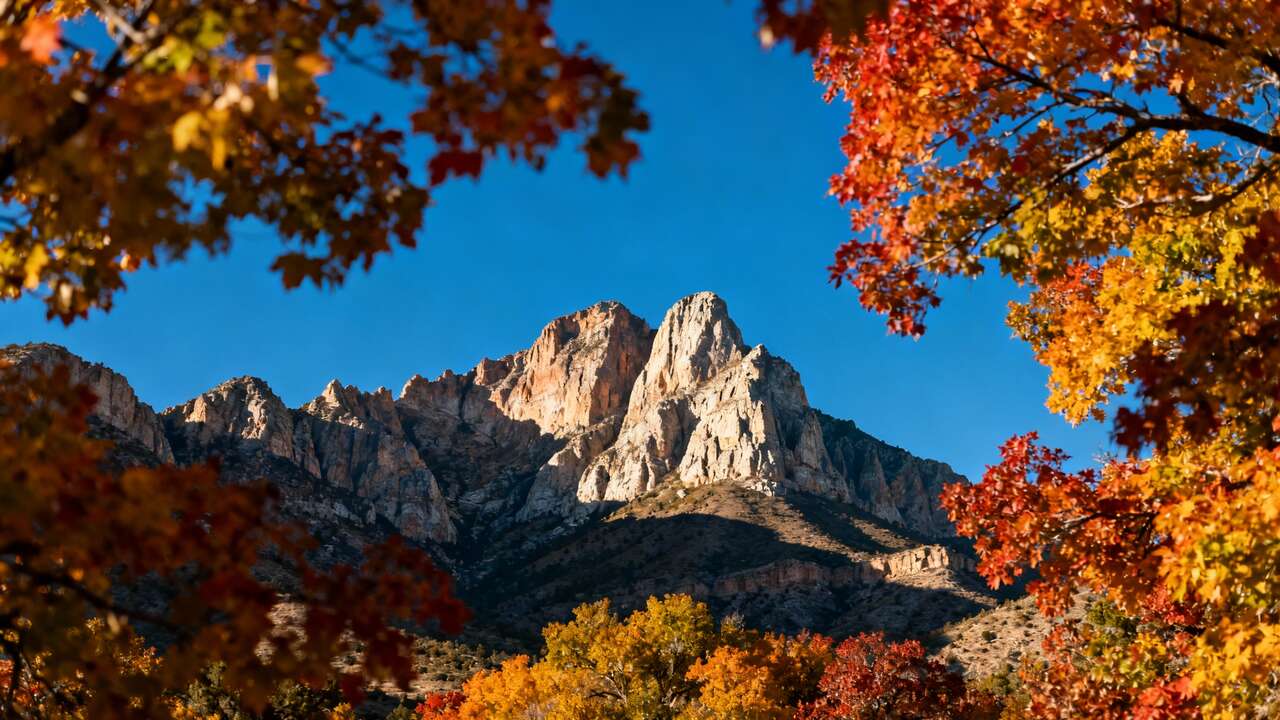

Forget the endless plains and sprawling cities often associated with the Lone Star State. Tucked away in the vastness of west Texas lies a rugged, vertical world that defies every stereotype. The Guadalupe Mountains National Park, a remote and stunningly beautiful wilderness, offers a dramatic landscape of deep canyons, high desert, and the highest peaks in Texas. This autumn, discover a side of the state you never knew existed, where the air is crisp and the canyons blaze with color.
Exploring the Guadalupe Mountains
A Geological Marvel
Guadalupe Mountains National Park is not just a collection of peaks; it is the world’s most extensive Permian fossil reef. Millions of years ago, this area was a vast inland sea, and the mountains are the fossilized remains of the Capitan Reef that grew along its edge. This geological history is visible everywhere, from the limestone cliffs of El Capitan to the fossil-rich rocks found along the trails. The park itself covers over 86,000 acres, offering a compact yet incredibly diverse environment for exploration. It’s a place where you can literally walk through ancient history, with every step taking you across a former seabed now lifted thousands of feet into the sky.
Key Park Features
While the entire park is a highlight, several features stand out and draw visitors from around the world. These elements combine to create an unforgettable outdoor experience, especially for those seeking solitude and a genuine connection with nature. The park is renowned for its pristine wilderness conditions, with minimal development preserving its rugged character.
- The “Top of Texas”: The park is home to Guadalupe Peak, which, at 8,751 feet, is the highest point in the state.
- Deep Canyons: McKittrick Canyon and Dog Canyon offer sheltered environments with unique ecosystems, providing a stark contrast to the surrounding Chihuahuan Desert.
- Pristine Night Skies: Its remote location far from city lights makes the park a premier destination for stargazing, with the Milky Way often visible to the naked eye.
- Extensive Trail System: Over 80 miles of trails wind through the park, catering to everyone from casual day hikers to seasoned backpackers.
The park’s raw and untamed nature is its greatest asset, providing a sanctuary for both wildlife and those looking to escape the hustle of modern life. This very wilderness supports an astonishing array of life, a testament to nature’s adaptability.
A rich biodiversity to explore
A Convergence of Ecosystems
The park’s dramatic elevation changes create a remarkable convergence of different habitats within a relatively small area. This is a place where three major ecosystems meet: the Chihuahuan Desert, the Rocky Mountains, and the southern Great Plains. The result is a biological melting pot, where species from each of these distinct regions can be found. On a single hike, you can journey from the cacti and succulents of the desert floor to the cool shade of ponderosa pine and Douglas fir forests at higher elevations. This layering of environments is what makes the Guadalupe Mountains a hotspot of biodiversity.
Canyons as Refuges
The canyons, particularly McKittrick Canyon, serve as critical biological refuges. Their steep walls provide shade and trap moisture, creating a microclimate significantly different from the exposed desert slopes. This unique environment allows for the growth of trees like the Bigtooth Maple and Texas Madrone, species typically found in more temperate regions. These sheltered areas act as islands of life, supporting a rich understory of plants and providing a vital water source for the park’s wildlife. Exploring these canyons feels like stepping into another world, one hidden from the harsh Texas sun. To truly experience these diverse ecosystems, one must venture onto the park’s celebrated trails.
Must-visit hikes this autumn
The Guadalupe Peak Trail
No visit is complete without attempting the Guadalupe Peak Trail. This strenuous 8.4-mile round-trip hike is a true challenge, but the reward is one of the most spectacular views in the entire state. The trail climbs over 3,000 feet, passing through several ecosystems on its way to the summit. At the top, a small steel pyramid marks the “Top of Texas,” offering a 360-degree panorama of the surrounding mountains and desert. In autumn, the cooler temperatures make the ascent more pleasant, and the clear air provides exceptional visibility. It’s a demanding but profoundly rewarding journey.
| Trail | Distance (Round Trip) | Elevation Gain | Average Time |
|---|---|---|---|
| Guadalupe Peak Trail | 8.4 miles / 13.5 km | 3,000 feet / 914 m | 6-8 hours |
| McKittrick Canyon Trail | 4.8 miles / 7.7 km (to Pratt Cabin) | 200 feet / 61 m | 2-3 hours |
| Devil’s Hall Trail | 3.8 miles / 6.1 km | 600 feet / 183 m | 3-4 hours |
McKittrick Canyon’s Autumn Splendor
If there is one hike that defines autumn in the Guadalupe Mountains, it is the McKittrick Canyon Trail. This area is famous for its stunning display of fall colors, a rare sight in Texas. The Bigtooth Maples that line the canyon floor turn brilliant shades of red, orange, and yellow, typically peaking in late October or early November. The relatively flat trail to Pratt Cabin is an easy walk, making the spectacle accessible to most visitors. For a more challenging experience, hikers can continue further into the canyon toward the Grotto and “the Notch,” immersing themselves deeper in this seasonal wonderland. The contrast of the vibrant foliage against the stark canyon walls is a photographer’s dream.
While these trails offer incredible experiences, they are all framed by the towering mountains that give the park its name.
Peaks not to be missed
The Iconic Summits
The park’s skyline is dominated by a series of impressive peaks, each offering a different perspective and challenge. Beyond Guadalupe Peak, the most recognizable is El Capitan. Though not the highest, its sheer, thousand-foot southern cliff face makes it the park’s most dramatic and iconic feature. It has served as a landmark for travelers for centuries. Nearby, Hunter Peak offers another fantastic summit experience via the Bear Canyon Trail, providing a different vantage point that looks back toward Guadalupe Peak. These mountains are not just geological formations; they are the heart and soul of the park.
A View from the Top
Reaching any of the park’s major summits is an accomplishment that rewards hikers with more than just bragging rights. The views from these high points are immense and humbling. On a clear day, you can see for a hundred miles, looking out over the salt flats to the west and the endless Chihuahuan Desert stretching in all directions. It’s a perspective that underscores the park’s isolation and wildness. Standing on one of these peaks, you feel a profound sense of solitude and a connection to the raw, untamed landscape that defines this corner of Texas. These peaks are not just rock and stone; they are the guardians of a vibrant ecosystem.
| Peak | Elevation | Distinguishing Feature |
|---|---|---|
| Guadalupe Peak | 8,751 feet / 2,667 m | Highest point in Texas |
| El Capitan | 8,085 feet / 2,464 m | Iconic sheer southern face |
| Hunter Peak | 8,368 feet / 2,550 m | Excellent views of Guadalupe Peak |
| Shumard Peak | 8,615 feet / 2,626 m | Third highest peak in Texas |
This rugged terrain, from canyon floors to mountain peaks, is home to a surprising variety of life that has adapted to thrive in these demanding conditions.
Flora and fauna of the Texas mountains
The Colors of Autumn Flora
The park’s botanical diversity is on full display in the fall. While the maples in McKittrick Canyon steal the show, they are not the only contributors to the autumn palette. Other plants add their own unique hues to the landscape, creating a complex and beautiful tapestry of color. Look for these species during your visit:
- Texas Madrone: An evergreen tree with rich, red peeling bark and bright red berries in the fall.
- Chisos Red Oak: Found in the higher elevations, its leaves turn a deep, rusty red.
- Velvet Ash: Contributes brilliant yellow leaves along riparian areas.
- Sumac: These shrubs often turn a fiery scarlet, adding splashes of intense color to the undergrowth.
Wildlife in the High Desert
The Guadalupe Mountains support a surprisingly robust animal population. While many creatures are elusive and most active at dawn and dusk, patient visitors may be rewarded with a sighting. Mule deer are commonly seen throughout the park, and a herd of elk roams the higher elevations. The park is also home to predators like mountain lions and coyotes, though they are rarely seen. Birdwatchers will find a rich environment, with species ranging from canyon wrens to golden eagles. Remember that these are wild animals; always observe from a safe distance and never feed them. Proper preparation is essential to safely enjoy this wild landscape.
Preparing your autumn visit
Timing and Logistics
To witness the peak fall colors, plan your visit for the last week of October through the first two weeks of November. However, this is also the busiest time of year, so be prepared for crowds, especially in McKittrick Canyon. The park has very limited services: there is no gas, food, or lodging available within its boundaries. The nearest services are in Pine Springs at the park entrance or further away in towns like Van Horn or Carlsbad, New Mexico. It is crucial to arrive with a full tank of gas and all the food and water you will need for your stay.
Essential Gear and Safety Precautions
The weather in the mountains is notoriously unpredictable and can change rapidly. A sunny, warm day can quickly turn cold and windy, especially at higher elevations. Proper preparation is not just a suggestion; it is a necessity for a safe and enjoyable trip.
- Water: This is the most critical item. Bring at least one gallon of water per person, per day. There are few reliable water sources on the trails.
- Layered Clothing: Wear layers that you can add or remove as conditions change. A windproof and waterproof outer layer is essential.
- Sturdy Footwear: The trails are rocky and rugged. Wear broken-in hiking boots with good ankle support.
- Sun Protection: The sun is intense, even on cool days. Bring a hat, sunglasses, and sunscreen.
Always check the weather forecast before you hike, and let someone know your itinerary. Cell service is unreliable at best, so do not depend on your phone for navigation or emergencies.
Challenge the notion of a flat Texas by exploring its highest peaks. Experience the rare beauty of autumn colors in the desert and stand on the “Top of Texas” to survey a vast, untamed wilderness. Plan your trip to Guadalupe Mountains National Park, pack your gear with care, and discover the vertical world hidden in the heart of the west. This rugged landscape offers an adventure that will reshape your understanding of the state.

- This Central American country is the new Costa Rica - 1 November 2025
- This “floating” sauna in a Norwegian fjord is the ultimate Scandi experience - 1 November 2025
- Why this small US town is the “Christmas Capital” of America - 1 November 2025