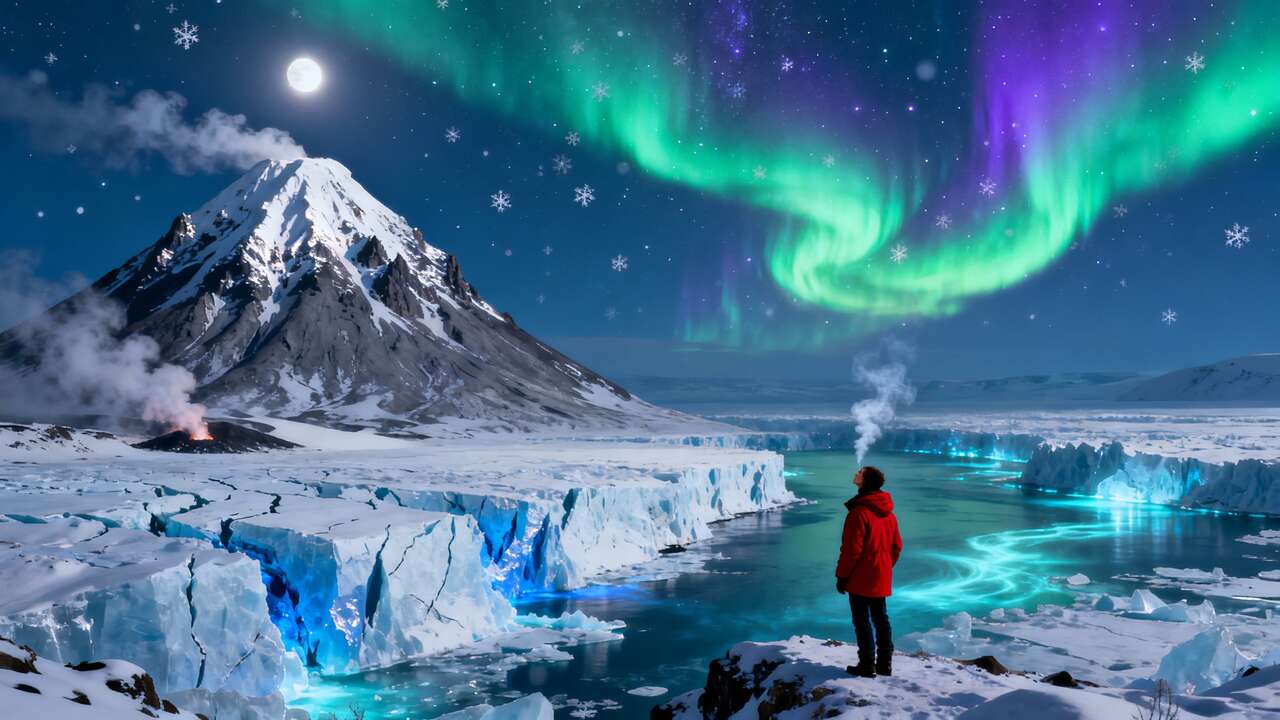

Iceland, an island nation where volcanoes rumble beneath colossal glaciers, presents a landscape forged by nature’s most dramatic forces. This is a place where the earth is visibly alive, breathing steam from geothermal vents and painting the night sky with ethereal lights. A journey here is not merely a trip but an immersion into a world of raw, untamed beauty. The stark contrasts of fire and ice create a unique environment that beckons adventurers and photographers alike, promising an experience that lingers long after the return home.
Stepping into Iceland
First impressions and the capital
Arrival at Keflavik International Airport immediately introduces visitors to the island’s distinctive terrain. The drive to Reykjavik, the world’s northernmost capital, cuts through vast lava fields covered in moss, a stark and lunar-like landscape that sets the stage for the wonders to come. The city itself is a vibrant hub of culture and color, a stark contrast to the monochromatic nature outside its limits. Reykjavik is a compact and walkable city, where modern architecture like the Harpa concert hall coexists with rows of colorful, traditional houses. Dominating the skyline is the magnificent Hallgrimskirkja church, whose design was inspired by the basalt columns found throughout the country. Ascending its tower offers a panoramic view, providing a perfect orientation to the city and the surrounding sea and mountains.
Navigating the land of extremes
To truly experience Iceland, particularly in winter, independent travel is key. Renting a vehicle, preferably one with four-wheel drive, provides the freedom to explore at one’s own pace and chase fleeting moments of beauty, like a sudden break in the clouds revealing the aurora. The famous Ring Road, which encircles the island, is largely accessible in winter, but conditions can change rapidly. It is essential to stay informed about weather and road closures. Planning is crucial due to the limited daylight, which can be as little as four to five hours around the winter solstice. This forces a more deliberate and focused approach to exploration, making each stop and each view more meaningful. Key tips for winter driving include:
- Always check road.is for real-time road conditions before setting out.
- Keep the gas tank at least half full, as gas stations can be far apart in rural areas.
- Pack emergency supplies such as water, snacks, and extra warm layers.
- Never pull over on the road itself to take photos; use designated pull-off areas.
With the right preparation, navigating Iceland’s winter landscape becomes an adventure in itself, revealing the raw power and serene beauty that define this unique country. This foundation of practical knowledge allows for a deeper dive into the geological forces that have shaped the island.
At the heart of fire and ice
Where continents drift apart
Iceland’s dramatic scenery is the direct result of its unique geological setting. The island sits astride the Mid-Atlantic Ridge, the boundary where the North American and Eurasian tectonic plates are slowly pulling apart. This rift is most visible at Þingvellir National Park, a UNESCO World Heritage site. Here, visitors can walk through the Almannagjá gorge, a massive fissure that marks the edge of the North American plate. The raw power of the earth is palpable in this valley, which is not only geologically significant but also historically important as the site of Iceland’s first parliament, the Alþingi, established in 930 AD. The constant volcanic activity along this ridge is the “fire” in the land of fire and ice, creating a landscape dotted with volcanoes, lava fields, and geothermal hotspots.
The earth’s geothermal breath
The volcanic activity beneath Iceland’s surface heats up groundwater, resulting in a spectacular display of geothermal phenomena. The most famous of these is the Haukadalur valley, home to the geysers. While the Great Geysir, which gave its name to all others, is now mostly dormant, its neighbor Strokkur erupts with impressive regularity. Every five to ten minutes, it shoots a column of boiling water and steam up to 30 meters into the air. This area is a testament to the immense energy simmering just below the surface.
| Feature | Description | Example |
|---|---|---|
| Geyser | A hot spring that periodically erupts, ejecting a column of water and steam. | Strokkur |
| Fumarole | An opening in the earth’s crust that emits steam and gases. | Námaskarð Pass |
| Hot Spring | A spring produced by the emergence of geothermally heated groundwater. | Blue Lagoon |
The very same geothermal forces that create these explosive displays also give rise to some of Iceland’s most captivating visual spectacles, from shimmering auroras in the sky to majestic waterfalls cascading over ancient cliffs.
Northern lights and frozen waterfalls
Dancing lights in the winter sky
Witnessing the Aurora Borealis is a primary goal for many winter visitors to Iceland. This natural light show, caused by solar particles interacting with the Earth’s magnetic field, transforms the dark sky into a canvas of shifting, ethereal colors. The best chance to see the aurora is on a clear, dark night away from any light pollution. While sightings are never guaranteed, the long nights of Icelandic winter significantly increase the odds. The experience is truly mesmerizing, as curtains of green, pink, and purple light dance silently overhead. Several tour operators offer guided “hunts,” using forecasts and local knowledge to find the best viewing spots, but with a rental car and a bit of luck, a private viewing is entirely possible.
Cascades frozen in time
Iceland is renowned for its countless waterfalls, and in winter, they take on a completely different character. The powerful cascades become adorned with intricate ice formations, and sometimes smaller falls freeze solid altogether. Gullfoss, the “Golden Falls,” is a magnificent two-tiered waterfall that thunders into a deep canyon. In winter, its spray freezes onto the surrounding rocks, creating a glittering icy spectacle. Further along the south coast, Skógafoss and Seljalandsfoss offer equally stunning winter views. At Seljalandsfoss, it is even possible to walk behind the curtain of water, though the path can be extremely slippery and requires caution. These frozen giants stand as silent, powerful monuments to the beauty of Iceland’s winter.
- Gullfoss: A massive, two-stage waterfall on the Hvítá river.
- Skógafoss: A wide, powerful cascade that produces a constant mist.
- Seljalandsfoss: A unique waterfall that visitors can walk behind.
- Goðafoss: The “Waterfall of the Gods” in the north, known for its curved shape.
The ice that transforms these waterfalls is just a hint of the colossal glaciers that dominate much of the Icelandic landscape, hiding even more spectacular frozen wonders within them.
Ice caves and glacial lagoons
Exploring the crystal cathedrals
Deep within Iceland’s glaciers, an otherworldly phenomenon occurs each winter. Meltwater from the summer carves intricate tunnels and caves into the ice. As temperatures drop, this water freezes, creating natural crystal ice caves. The ice within these caves is incredibly dense, having been compressed over centuries, which absorbs all colors of light except for blue. The result is an intense, sapphire-blue light that filters through the ice, creating a surreal and breathtaking environment. These caves are ephemeral, forming in new locations each year and accessible only from roughly November to March with certified glacier guides. Entering one is like stepping into a giant gemstone, a truly unique experience that showcases the incredible beauty of glacial ice.
Where icebergs meet the ocean
At the edge of the Vatnajökull glacier, Europe’s largest ice cap, lies the Jökulsárlón glacier lagoon. Here, massive icebergs calve from the Breiðamerkurjökull glacier tongue and float serenely in the deep, icy water. The icebergs, varying in color from translucent white to deep blue and even black with volcanic ash, drift slowly towards the ocean. Seals can often be seen swimming among them or resting on the floes. The icebergs that make it out to sea are then washed ashore onto a nearby black sand beach, which has been aptly named Diamond Beach. The contrast of the clear, sculpted ice against the black volcanic sand is a photographer’s dream and one of Iceland’s most iconic sights.
| Lagoon | Location | Key Feature |
|---|---|---|
| Jökulsárlón | Southeast Iceland | Large icebergs, seals, connection to Diamond Beach. |
| Fjallsárlón | Southeast Iceland | Smaller, more intimate lagoon with an impressive glacier face view. |
This dynamic environment, where ice is in constant motion, is also a rich feeding ground that attracts some of the ocean’s most impressive inhabitants.
Winter wildlife and orcas
The hunt for marine giants
While summer is often considered the peak season for whale watching in Iceland, winter offers its own unique and rewarding opportunities. The cold, nutrient-rich waters are an ideal feeding ground for several species. In particular, the waters around the Snæfellsnes Peninsula are known for frequent sightings of orcas (killer whales) during the winter months. These intelligent predators are often seen hunting for herring, providing a spectacular show for those on boat tours. Humpback whales, white-beaked dolphins, and harbor porpoises are also commonly spotted. Winter whale watching tours offer a different perspective, with the dramatic backdrop of snow-covered mountains and the low-hanging sun creating a magical atmosphere on the water.
The resilient creatures of the land
Iceland’s terrestrial wildlife is sparse but resilient. The most famous resident is the Icelandic horse. This unique breed, brought to the island by the Vikings, is known for its hardiness, gentle temperament, and five distinct gaits, including the smooth tölt. They are perfectly adapted to the harsh winter conditions, with a thick, shaggy coat that protects them from the cold. Seeing these beautiful animals against a snowy landscape is a quintessential Icelandic image. In the east of the country, it is also possible to spot herds of wild reindeer, which were introduced in the 18th century and now roam freely.
- Sturdy Build: Small and strong, well-suited for rough terrain.
- Five Gaits: In addition to walk, trot, and canter, they have the tölt and flying pace.
- Purebred: Importation of horses is forbidden, keeping the breed isolated and pure.
After days spent exploring the cold, wild landscapes and observing its hardy inhabitants, there is no better way to unwind than by immersing oneself in the island’s natural geothermal warmth.
Geothermal waters and relaxation
The world-famous Blue Lagoon
No trip to Iceland is complete without a visit to a geothermal spa, and the most famous of all is the Blue Lagoon. Located in a lava field on the Reykjanes Peninsula, its milky-blue waters are a byproduct of the nearby geothermal power plant. The water is rich in minerals like silica and sulfur and is renowned for its skin-healing properties. Floating in the warm, 38°C (100°F) water while the cold winter air swirls around is a deeply relaxing and surreal experience. The contrast between the warmth of the lagoon and the often snowy landscape surrounding it is part of its unique charm. An in-water bar and silica mud masks complete the luxurious experience.
Local hot pots and natural springs
Beyond the Blue Lagoon, Iceland is dotted with hundreds of other geothermal pools, from sophisticated spas to rustic, natural hot springs known locally as “hot pots.” These offer a more intimate and often more affordable way to enjoy the country’s geothermal bounty. Every town has a public swimming pool (a sundlaug) with geothermally heated water and several outdoor hot tubs, which are central to Icelandic social life. For a more natural experience, locations like the Secret Lagoon in Flúðir or the Mývatn Nature Baths in the north provide stunning scenery and a relaxing atmosphere. Seeking out these less-famous spots allows for a more authentic connection to the culture and the natural landscape that defines Iceland.
| Name | Region | Characteristics |
|---|---|---|
| Blue Lagoon | Reykjanes Peninsula | Iconic, large, luxurious, rich in silica. |
| Secret Lagoon | Golden Circle | Oldest swimming pool in Iceland, natural feel, small geyser nearby. |
| Mývatn Nature Baths | North Iceland | “The Blue Lagoon of the North,” stunning views, less crowded. |
| Sky Lagoon | Reykjavik Area | Newer spa with an infinity pool overlooking the ocean. |
Iceland’s embrace of its geothermal energy for relaxation and community perfectly encapsulates the nation’s harmonious relationship with its powerful natural environment.
From the raw power of its volcanic core to the serene beauty of its glaciers and celestial light shows, Iceland in winter is an unparalleled adventure. It is an immersion into a world of dramatic contrasts: fire and ice, darkness and light, intense cold and soothing warmth. Exploring its frozen waterfalls, walking inside a glacier, watching orcas in the frigid sea, and soaking in geothermal lagoons creates a profound connection with the elemental forces of nature. This journey through the land of fire and ice is an unforgettable exploration of one of the planet’s most unique and dynamic landscapes.

- This Central American country is the new Costa Rica - 1 November 2025
- This “floating” sauna in a Norwegian fjord is the ultimate Scandi experience - 1 November 2025
- Why this small US town is the “Christmas Capital” of America - 1 November 2025