
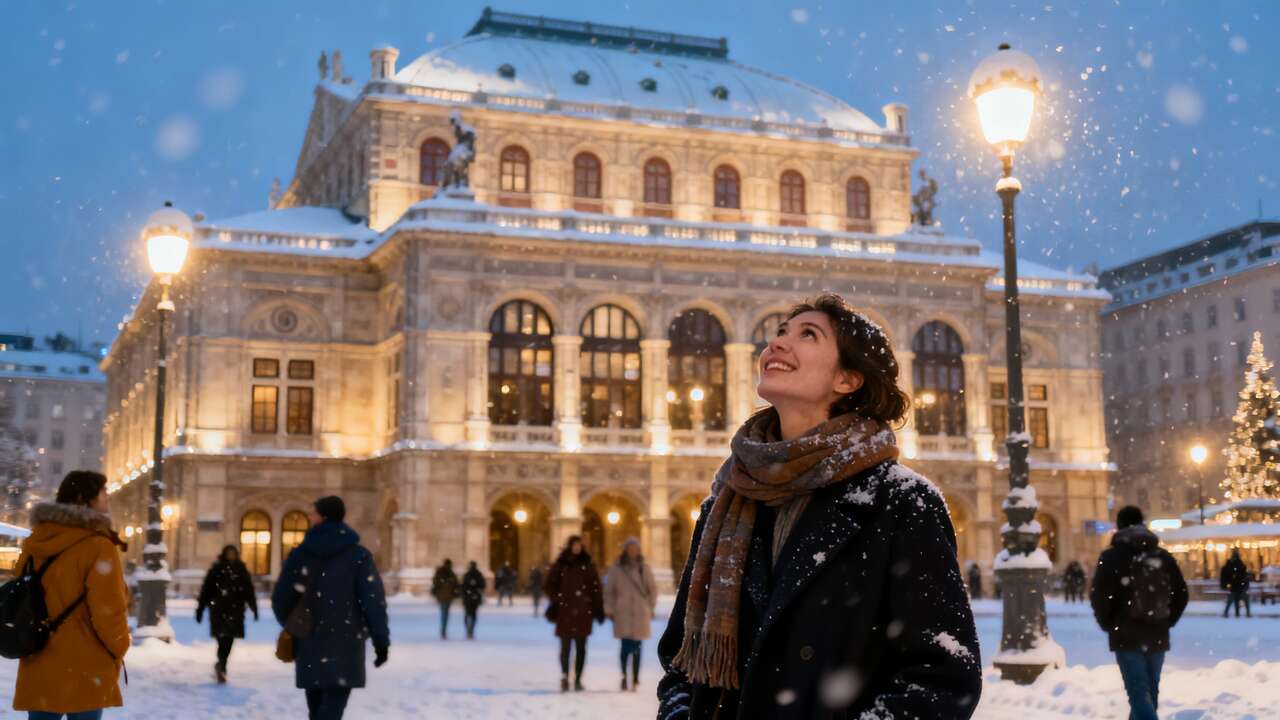

When winter casts its serene spell over Europe, one city transforms into a tableau of imperial elegance and festive warmth. Vienna, austria’s capital, sheds its summer vibrancy for a more refined, cozy allure, solidifying its reputation as the classiest of winter city breaks. The air, crisp and cold, carries the faint melody of a waltz and the scent of mulled wine, while the grand architecture of the Habsburg empire stands stoically under a potential dusting of snow. This is not a city that hibernates; rather, it awakens to a different kind of life, one that revolves around glittering lights, concert halls, and the time-honored tradition of its coffee houses. For the discerning traveler, a Viennese winter is an immersion in a culture where history and seasonal cheer intertwine seamlessly.
The winter magic of Vienna
An imperial city transformed by winter
The grandeur of Vienna’s city center, a UNESCO World Heritage site, takes on a particularly dramatic quality during the winter months. The wide boulevards of the Ringstrasse, flanked by monumental buildings like the opera house, the parliament, and the city hall, appear even more majestic. A layer of snow softens the city’s edges, creating a monochromatic masterpiece of stone and white. The experience of walking through these historic streets is akin to stepping into a nineteenth-century painting, where the clip-clop of horse-drawn carriages, or Fiaker, provides a rhythmic soundtrack. The city’s many parks and gardens, such as the Burggarten or Volksgarten, become quiet, contemplative spaces, their statues and fountains blanketed in white.
The Viennese waltz of snowflakes
While heavy snowfall is not guaranteed every day, the winter climate in Vienna is cold enough to create the perfect conditions for a picturesque winter scene. The city embraces the chill, viewing it as an essential component of the season’s charm. Visitors should come prepared for the cold, as it is this very crispness that makes the warmth of a bustling market or a cozy cafe so inviting. The city is fully equipped to handle winter weather, ensuring that transport and attractions remain accessible, allowing life to continue with its characteristic poise and efficiency.
| Month | Average High Temperature (°C) | Average Low Temperature (°C) |
|---|---|---|
| December | 4°C | -1°C |
| January | 3°C | -2°C |
| February | 5°C | -1°C |
Illuminations and festive spirit
As daylight hours shorten, Vienna compensates with a breathtaking display of illuminations. From late November onwards, the main shopping streets like Graben and Kärntner Strasse are draped in elaborate chandeliers of light, casting a golden glow over the cobblestones. Storefronts compete with elegant displays, and nearly every square hosts some form of festive decoration. This city-wide effort creates a truly immersive atmosphere, making an evening stroll not just a walk, but a journey through a luminous, festive wonderland.
The omnipresent festive lighting and the palpable sense of anticipation in the air naturally guide one towards the epicenter of Viennese advent celebrations: the world-renowned Christmas markets.
Viennese Christmas markets
A centuries-old tradition
The Viennese Christmas market, or Christkindlmarkt, is an institution with roots stretching back to the middle ages. What began as a simple December market in 1298 has evolved into a cherished tradition that is central to the city’s identity during advent. These markets are not merely commercial ventures; they are social hubs where friends and families gather to share in the festive spirit, escaping the winter cold with warm drinks and conversation. The air is thick with the aromas of cinnamon, roasting almonds, and pine, creating a sensory experience that is quintessentially Viennese.
The most enchanting markets to visit
Vienna boasts over twenty official Christmas markets, each with its own unique character and charm. While exploring them all would be a feat, several stand out as essential stops on any winter itinerary.
- Christkindlmarkt on Rathausplatz: The largest and most famous market, set against the stunning backdrop of the neo-gothic city hall. It features a giant ice rink, a traditional nativity scene trail, and hundreds of stalls.
- Christmas Village on Maria-Theresien-Platz: Nestled between the art history museum and the natural history museum, this market offers a more traditional and spacious feel, with a focus on artisanal crafts.
- Old Viennese Christmas Market on Freyung: One of the oldest, this market maintains a more traditional and less commercial atmosphere, offering handcrafted goods and a peaceful ambiance.
- Art & Craft Market on Karlsplatz: Known for its strict selection of vendors selling only high-quality, handmade arts and crafts, this market also features live music and workshops.
–
What to find at the stalls
The stalls are a treasure trove of festive goods. Visitors can find everything from delicate hand-blown glass ornaments and intricate wooden toys to warm woolen hats and gloves. But for many, the main draw is the food and drink. Indulging in a mug of Glühwein (mulled wine) or a non-alcoholic Kinderpunsch is a rite of passage. These are often accompanied by roasted chestnuts, candied fruits, or hearty sausages, providing the perfect fuel for winter exploration.
While the markets provide a vibrant, open-air cultural experience, Vienna’s most profound cultural contributions are often found indoors, within the hallowed walls of its concert halls.
The rich musical history of Vienna
The heart of classical music
Vienna’s designation as the “City of Music” is no mere marketing slogan; it is a historical fact. For centuries, the city was the epicenter of musical innovation, attracting the greatest composers of the classical and romantic eras. Their legacy is not confined to museums; it is a living, breathing part of the city’s daily life. The Vienna Philharmonic is consistently ranked among the world’s top orchestras, and the angelic voices of the Vienna Boys’ Choir have enchanted audiences for over 500 years. This musical heritage permeates the city, offering an unparalleled experience for any music lover.
Iconic venues for a winter concert
Attending a classical concert in winter is a quintessential Viennese experience. The city’s venues are legendary, as much for their acoustics as for their architectural splendor. The Vienna State Opera (Wiener Staatsoper) is one of the world’s leading opera houses, offering a packed schedule of world-class performances. The Musikverein, home of the Vienna Philharmonic, is famous for its acoustically perfect Golden Hall, where the annual New Year’s Concert is broadcast globally. The Konzerthaus also offers a diverse program, from classical to contemporary, in a stunning art nouveau setting. A performance in one of these halls is an unforgettable way to spend a cold winter evening.
After the formal elegance of a concert, the Viennese have perfected the art of winding down in a setting that is both sophisticated and deeply comforting: the coffee house.
Viennese cafes: an art of living
More than just coffee
The Viennese coffee house is an institution, a “public living room” where time seems to slow down. In 2011, this unique culture was officially recognized by UNESCO as an Intangible Cultural Heritage. It is a place for contemplation, conversation, and creativity. The tradition encourages patrons to linger for hours over a single cup of coffee, reading one of the complimentary newspapers, writing, or simply observing the world go by. The atmosphere is one of relaxed elegance, a true escape from the hustle and bustle of the city.
Historic coffee houses to discover
Many of Vienna’s coffee houses are historic landmarks in their own right, with opulent interiors that have changed little in over a century. They feature marble-topped tables, plush velvet banquettes, and tuxedo-clad waiters who serve with an old-world formality. Café Central, with its vaulted ceilings and portraits of famous patrons, offers a journey back to the city’s intellectual heyday. At Café Sacher, one can sample the world-famous chocolate cake in its original home. For a less tourist-frequented but equally authentic experience, Café Sperl retains a beautifully preserved nineteenth-century charm.
A symphony of pastries and coffees
The menu in a Viennese cafe is a delight. Beyond a simple espresso, one finds a complex vocabulary of coffee preparations.
- Melange: The Viennese equivalent of a cappuccino, a shot of espresso with steamed milk, topped with foam.
- Einspänner: A strong black coffee in a glass, topped with a large dollop of whipped cream.
- Verlängerter: An espresso “lengthened” with hot water, similar to an americano.
These are invariably accompanied by a slice of cake or a pastry. The Apfelstrudel (apple strudel) and the dense, chocolatey Sachertorte are the most famous, but the selection is vast and uniformly excellent.
Fortified by coffee and cake, one is ready to venture back into the cold to appreciate how Vienna’s most famous landmarks are framed by the stark beauty of winter.
Iconic monuments under the snow
The Hofburg Palace in its winter coat
The Hofburg Palace, the former seat of the Habsburg emperors, is a sprawling complex that dominates the city center. In winter, its immense courtyards and imposing facades take on a stern beauty. A light snowfall highlights the intricate details of its various architectural styles, from gothic to baroque. Walking through the Outer Castle Gate into the vast Heldenplatz, with the palace wings stretching out on either side, is a powerful reminder of Vienna’s imperial past. The palace now houses several museums, including the Sisi Museum and the Imperial Apartments, offering a warm refuge and a deep dive into history.
Schönbrunn Palace and its frosty gardens
The former summer residence of the emperors, Schönbrunn Palace, is just as magnificent in winter. The buttery-yellow facade of the palace stands out against a grey sky or a white landscape. While the famous flowerbeds are dormant, the formal gardens retain their geometric beauty. The bare branches of the trees create intricate patterns, and a walk up to the Gloriette monument on the hill provides a stunning, panoramic view of the frosted city. The palace’s Christmas market, held in the main courtyard, adds a festive layer to this already magical setting.
From the grandeur of imperial palaces, the city’s culinary scene offers a different, yet equally satisfying, form of cultural immersion.
Culinary tastings in winter
Hearty dishes for cold days
Austrian cuisine is perfectly suited for winter. It is rich, hearty, and deeply comforting. The classic Wiener Schnitzel, a breaded and fried veal cutlet, is a year-round staple but feels particularly satisfying on a cold day. Goulash, a rich beef stew seasoned with paprika, is another winter favorite, often served with a bread dumpling (Semmelknödel) to soak up the delicious sauce. These dishes are central to the menus of traditional Viennese restaurants, known as Beisl, which offer a cozy and authentic dining experience.
| Dish | Main Ingredients | Description |
|---|---|---|
| Wiener Schnitzel | Veal, flour, eggs, breadcrumbs | A thin, breaded, and pan-fried cutlet of veal. |
| Tafelspitz | Beef, root vegetables, broth | Boiled beef in broth, served with minced apples and horseradish. |
| Kaiserschmarrn | Flour, eggs, sugar, raisins | A fluffy shredded pancake, served with fruit compote. |
Sweet temptations beyond the cafes
Vienna’s sweet tooth extends far beyond the coffee house. Winter is the season for Kaiserschmarrn, a delightful shredded pancake often served as a main course or a decadent dessert. The Christmas markets are also a source of countless treats, from various types of gingerbread (Lebkuchen) to baked apples filled with marzipan and raisins. These sweet temptations are an integral part of the city’s winter food culture, providing moments of pure indulgence.
This journey through Vienna’s winter offerings reveals a city that is both grand and intimate. It balances its imperial legacy with a warm, festive spirit, creating a travel experience that is as culturally enriching as it is cozy. The harmonious blend of world-class music, enchanting markets, historic coffee houses, and hearty cuisine confirms its status as an unparalleled winter destination. Vienna in winter is a city that doesn’t just host visitors; it envelops them in a timeless, elegant embrace.

- This Central American country is the new Costa Rica - 1 November 2025
- This “floating” sauna in a Norwegian fjord is the ultimate Scandi experience - 1 November 2025
- Why this small US town is the “Christmas Capital” of America - 1 November 2025
Pubblicazioni simili :
 This Spanish island is the secret winter training ground for all of Europe’s cyclists
 This national park is home to the world’s most beautiful frozen waterfalls
 Forget Iceland: This Canadian territory has better Northern Lights
 Discover Florida’s Crystal-Clear Springs: a Hidden Paradise Beyond the Beaches