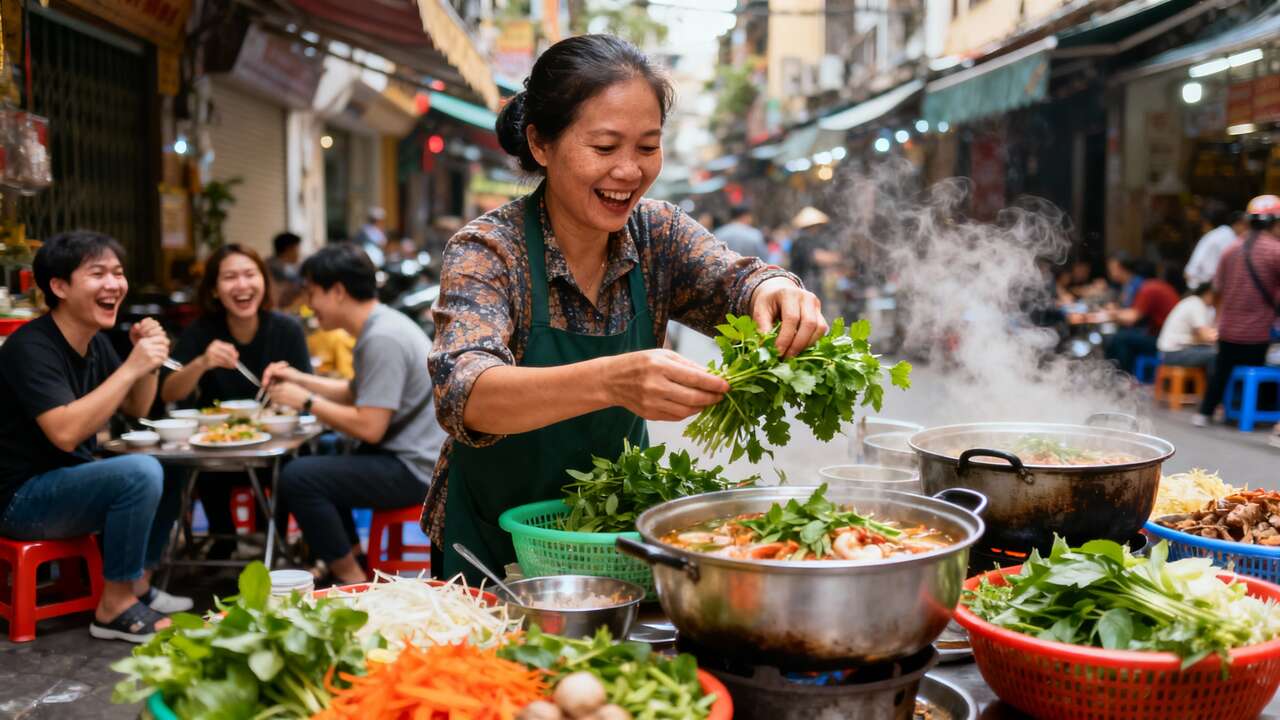

When food lovers dream of an Asian culinary mecca, their minds often drift to the vibrant street stalls of Bangkok. Yet, another capital city has quietly asserted itself as a paramount destination for gourmands, offering a depth of flavor and cultural immersion that is truly unparalleled. In Hanoi, the capital of Vietnam, food is not merely sustenance; it is the rhythm of daily life, a sensory explosion that unfolds on every street corner, in every alley, and from every bubbling pot. The city’s charm lies in its bustling streets, where an ancient culinary tradition is served up with startling freshness and affordability, making it a true paradise for anyone who travels to eat.
Street food: a sensory immersion in Hanoi
The symphony of the streets
To understand Hanoi’s food scene is to experience it firsthand, perched on a tiny plastic stool on a crowded sidewalk. The air is thick with the aroma of grilling pork, the steam from simmering pots of broth, and the sharp scent of fresh herbs. It’s a symphony of sounds: the rhythmic clatter of cleavers on wooden blocks, the sizzle of oil in hot woks, and the constant hum of motorbikes weaving through lanes of diners. This is not just a meal; it is a fully immersive cultural event, where the line between kitchen and dining room dissolves completely, inviting everyone to be part of the spectacle.
A culture of freshness and immediacy
What makes Hanoi’s street food so exceptional is its unwavering commitment to freshness. Vendors typically shop for ingredients at the local market each morning, ensuring that every component, from the vegetables to the meat, is of the highest quality. Most food stalls operate as open-air kitchens, allowing you to watch as your meal is prepared right before your eyes. This transparency builds a deep connection between the cook and the diner, rooted in the shared appreciation for a dish made with care and the freshest possible ingredients. There is no pretense, only the honest, delicious reality of food cooked to order.
An economic and social pillar
Street food is the lifeblood of Hanoi. It provides livelihoods for countless families and serves as a vital social hub for the community. Hanoians from all walks of life gather at these humble stalls for breakfast, lunch, and dinner, sharing stories over bowls of noodles or crispy sandwiches. The prices are incredibly affordable, making it possible for everyone to enjoy a wide variety of high-quality dishes. This accessibility ensures that street food remains an integral and democratic part of the city’s identity, where the quality of a dish often surpasses that of more formal restaurants.
The sheer sensory experience of the streets naturally draws one’s attention to the specific dishes that create this incredible culinary tapestry. It is in these iconic recipes that the soul of Hanoi’s gastronomy truly reveals itself.
Key specialties that captivate gourmets
Phở: the soul of Vietnamese cuisine
No discussion of Hanoian food is complete without paying homage to phở. This iconic noodle soup is a national treasure, a comforting and complex dish that warms the soul. The magic lies in its broth, a clear, aromatic liquid simmered for hours with beef bones, charred ginger, onion, and a delicate blend of spices like star anise and cinnamon. Served with rice noodles and tender slices of beef (phở bò) or chicken (phở gà), and garnished with fresh herbs, it is the quintessential Hanoi breakfast. Renowned establishments like Phở Bát Đàn and Phở Thìn are essential stops for anyone seeking an authentic taste of this masterpiece.
Bún Chả: a harmony of grilled flavors
If phở is the morning ritual, bún chả is the heart of lunchtime in Hanoi. This beloved dish features succulent grilled pork patties and slices of pork belly served in a bowl of tangy dipping sauce made from fish sauce, vinegar, and sugar. It is accompanied by a platter of fresh rice vermicelli noodles (bún) and a basket of assorted herbs and lettuce. The act of dipping the noodles and pork into the flavorful sauce creates a perfect harmony of sweet, sour, and savory notes. The fame of spots like Bún Chả Hương Liên, where a former US president once dined, has made this dish a global sensation.
Bánh Mì: the Franco-Vietnamese fusion
The bánh mì is a delicious legacy of Vietnam’s colonial past, transforming a simple French baguette into a uniquely Vietnamese creation. The crispy, airy bread is sliced open and filled with a vibrant combination of ingredients. Typical fillings include:
- Pâté and various Vietnamese cold cuts
- Pickled carrots and daikon
- Fresh cilantro and cucumber
- A touch of chili for a spicy kick
This sandwich offers a symphony of textures and flavors in every bite. For a perfect example, food tours often stop at places like Bánh Mì 25, a must-visit for any sandwich aficionado.
The secret to these unforgettable dishes lies not only in the recipes passed down through generations but also in the unparalleled freshness of their components. This quest for the finest ingredients invariably leads to the beating heart of Hanoi’s culinary life: its bustling local markets.
The local markets: essential places for epicureans
A vibrant mosaic of colors and scents
Stepping into a Hanoian market like Đồng Xuân Market or a smaller neighborhood hub is to dive headfirst into the city’s gastronomic core. The aisles are a kaleidoscope of colors: pyramids of fiery red chilies, mountains of verdant herbs, and the glistening scales of freshly caught fish. The air is a rich tapestry of smells, from the earthy scent of raw ginger and lemongrass to the pungent aroma of fermented fish sauce. These markets are living, breathing entities that supply the city’s countless street stalls and family kitchens with the building blocks of every meal.
More than just shopping: a cultural hub
Local markets are far more than just places to buy produce; they are the epicenters of community life. Here, vendors, many of whom have occupied the same spot for generations, share news and gossip with their regular customers. It is a place of connection, where shoppers can learn about the best way to cook a certain vegetable or which cut of meat is best for a particular dish. For an epicurean, observing these interactions offers a profound insight into the local culture and the deep respect Hanoians have for their food and its origins.
Sourcing the best ingredients
The direct link between the market and the plate is what defines Hanoi’s cuisine. The quality of a dish is directly tied to the quality of the raw materials sourced from these vibrant marketplaces.
| Ingredient | Found In | Used In Dish(es) |
|---|---|---|
| Fresh Rice Noodles (Bún) | Dedicated noodle stalls | Bún Chả, Bún Rieu, Bún Bò Nam Bộ |
| Aromatic Herbs (Rau Thơm) | Vegetable vendors | Phở, Gỏi Cuốn, Bánh Xèo |
| Star Anise & Cinnamon Bark | Spice merchants | Phở broth, meat marinades |
| Pork Belly | Butcher stalls | Bún Chả, Thit Kho |
While these markets are bastions of tradition, they also supply a new generation of chefs who are looking to both honor and elevate Hanoi’s culinary heritage. This dynamic interplay between the old and the new is reshaping the city’s dining landscape.
From tradition to innovation: when Hanoi reinvents its dishes
The new wave of Hanoian chefs
A new generation of culinary talent is emerging in Hanoi, bringing a fresh perspective to the city’s time-honored recipes. These chefs, often trained abroad, are returning with modern techniques and a desire to innovate. They are deconstructing classic dishes, experimenting with presentation, and refining flavors while maintaining a deep respect for the original essence of the cuisine. This movement is creating a more diverse dining scene, where a traditional bowl of phở can be enjoyed on one corner and a re-imagined version in a contemporary restaurant on the next.
Fusion cuisine and contemporary dining
Alongside the reinvention of traditional dishes, Hanoi is also seeing a rise in fusion cuisine. Restaurants are beginning to blend Vietnamese ingredients and flavor profiles with international culinary styles, from Japanese to French. This has led to the creation of exciting and inventive dishes that showcase the versatility of local produce. Diners can now find everything from a phở-inspired cocktail to a bánh mì with unconventional fillings, reflecting Hanoi’s growing status as a cosmopolitan city with a forward-thinking food culture.
Culinary workshops and cooking classes
The global interest in Vietnamese food has fueled a boom in cooking classes and culinary workshops throughout Hanoi. These experiences offer visitors a hands-on opportunity to learn the secrets behind their favorite dishes. Participants often start with a guided tour of a local market to select fresh ingredients before heading to the kitchen to learn techniques from expert local cooks. This trend not only empowers tourists to recreate the flavors of Hanoi at home but also fosters a deeper appreciation for the skill and tradition embedded in the cuisine.
This growing appreciation is not confined to the city’s borders; the flavors and philosophies of Hanoian cooking have begun to resonate powerfully across the globe.
The influence of Vietnamese cuisine on the global culinary scene
From street stalls to international acclaim
Dishes that were once humble street food staples in Hanoi have become global culinary icons. Phở and bánh mì are now ubiquitous in major cities around the world, from New York to Paris. This international popularity has introduced a global audience to the core tenets of Vietnamese cooking: balance, freshness, and complexity of flavor. The success of these dishes has paved the way for lesser-known specialties to gain recognition, further cementing Vietnam’s position as a major player in the world of gastronomy.
The “health halo” of Vietnamese food
In an era of increasing health consciousness, Vietnamese cuisine has gained a reputation for being both delicious and nutritious. Its emphasis on fresh ingredients and balanced composition appeals to modern diners. Key healthy aspects include:
- Abundant fresh herbs and vegetables: These provide vitamins, minerals, and complex flavors without adding calories.
- Broth-based soups: Dishes like phở are hydrating and satisfying yet light.
- Minimal use of oil and dairy: Cooking methods often involve grilling, steaming, or boiling rather than heavy frying.
- Lean proteins: Grilled pork, chicken, and fish are common components.
This “health halo” has made Vietnamese food a popular choice for those seeking a flavorful yet wholesome dining experience.
A source of inspiration for international chefs
The sophisticated flavor principles of Vietnamese cuisine, particularly the art of balancing the five fundamental tastes (sweet, sour, salty, bitter, and umami), have captured the imagination of chefs worldwide. Renowned culinary figures are increasingly incorporating Vietnamese ingredients like fish sauce, lemongrass, and fresh herbs into their own creations. This influence is not just about borrowing recipes but about adopting a philosophy of cooking that prioritizes harmony and freshness, proving that the lessons from Hanoi’s kitchens have a universal appeal.
Yet, to fully appreciate the food of Hanoi, one must also embrace the rich cultural tapestry in which it is woven. The city offers far more than just a meal; it provides a complete and unforgettable experience.
Hanoi, beyond food: a complete cultural experience
A journey through history and architecture
Hanoi is a city where history is etched into every street. The narrow lanes of the Old Quarter, with their traditional tube houses and artisan guilds, tell stories of a thousand years of commerce. The serene beauty of Hoan Kiem Lake and the ancient Temple of Literature offer peaceful retreats from the urban bustle. This rich historical backdrop provides the context for the city’s culinary traditions. The flavors of each dish are intertwined with the history of the land, from the French influence in the bánh mì to the ancient recipes perfected over centuries. Exploring Hanoi’s landmarks is to understand the cultural soil from which its gastronomy has grown.
The art of coffee and conversation
Hanoi’s coffee culture is as legendary as its food. The city is teeming with cafes, from rustic, hidden spots down narrow alleys to chic, modern establishments with rooftop views. Vietnamese coffee, strong and aromatic, is a ritual in itself. Whether you opt for the classic iced coffee with condensed milk (cà phê sữa đá) or the uniquely Hanoian egg coffee (cà phê trứng), a velvety and decadent concoction, taking time for a coffee is an essential part of the local experience. These cafes are centers of social life, where friends gather to talk, relax, and watch the world go by.
A welcoming and vibrant population
Ultimately, the heart of Hanoi’s charm lies in its people. The warmth and hospitality of Hanoians are palpable, from the street food vendor who proudly explains her family’s recipe to the local resident happy to offer directions. This welcoming spirit transforms a simple tourist visit into a meaningful cultural exchange. Engaging with the local population, sharing a meal, and learning their stories adds an invaluable layer to the travel experience, making the flavors of the food taste even sweeter. The human connection is the final, essential ingredient in Hanoi’s recipe for a perfect destination.
Hanoi offers a journey that captivates all the senses. Its world-class street food, from the iconic phở to the humble bánh mì, provides a direct line to the heart of Vietnamese culture. This culinary prowess, combined with the city’s rich history, vibrant coffee scene, and the genuine warmth of its people, creates an experience that is both profound and unforgettable. It is a city that doesn’t just feed you; it nourishes your soul, solidifying its place as a true paradise for food lovers and curious travelers alike.

- This Central American country is the new Costa Rica - 1 November 2025
- This “floating” sauna in a Norwegian fjord is the ultimate Scandi experience - 1 November 2025
- Why this small US town is the “Christmas Capital” of America - 1 November 2025